A cat collar only does its job when it fits. Too loose and it snags a paw or slips off; too tight and it rubs, restricts, and stresses the animal. The good news is that getting it right takes about two minutes and a soft tape measure. This guide walks through measuring, applying the classic fit test, and choosing the width and hardware that keep a collar both secure and safe to wear.
Why fit is a safety issue, not a comfort nicety
A poorly sized collar is a hazard, not just an annoyance. Cats are climbers and squeezers, and a collar that hangs loose can catch on a branch, a fence, or a piece of furniture, or let a front leg slip through so the strap ends up under the armpit. A collar cinched too tight, on the other hand, can chafe the neck, mat the fur, and make a cat miserable enough to fight it constantly. The target is a specific middle ground: snug enough to stay put during normal movement, loose enough that the safety hardware can do its job in an emergency. Everything below is aimed at hitting that window.
How to measure your cat’s neck
Reach for a flexible fabric or sewing tape measure rather than a rigid one. Wrap it around the neck where the collar will actually sit, typically low and close to the shoulders, and lay it flat against the fur without pressing in or compressing the coat. Read the number where the tape meets, and if the cat is fidgety, take the measurement two or three times and trust the consistent reading. A length of string marked and then held against a ruler works just as well if you do not have a tape.
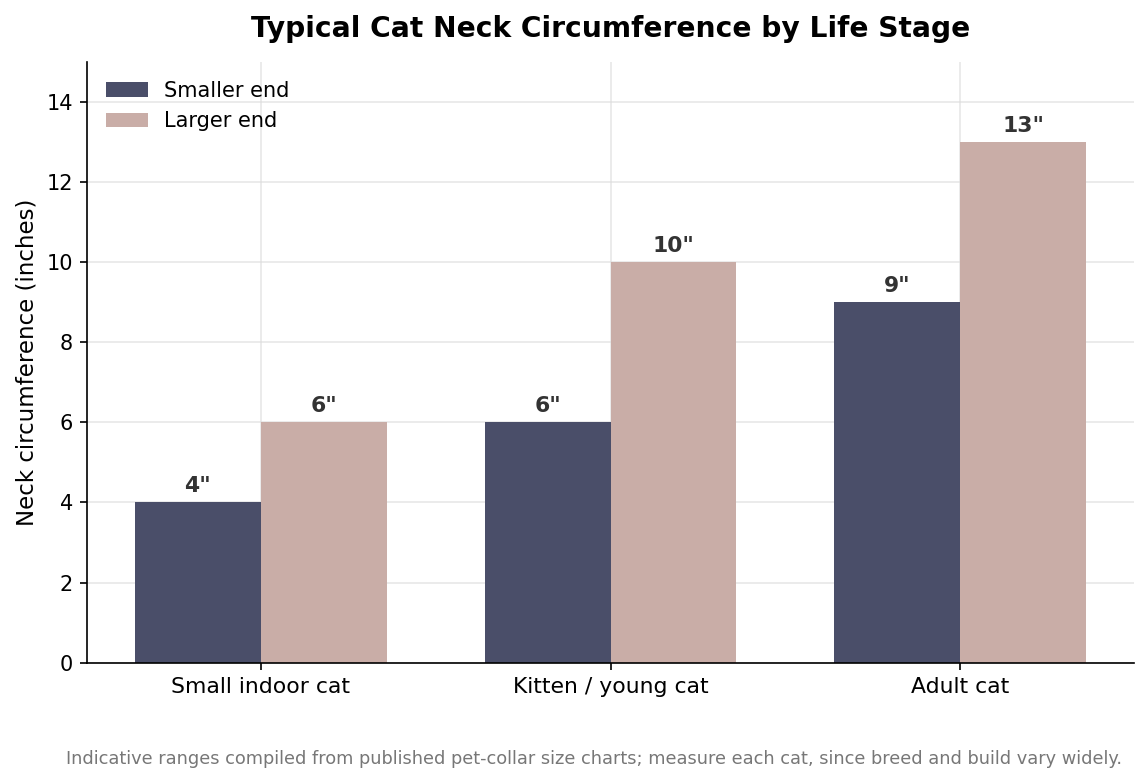
Those measurements land in fairly predictable ranges. Small indoor cats often measure roughly 4 to 6 inches around, kittens and younger cats commonly fall between 6 and 10 inches, and full-grown adult cats typically sit somewhere around 9 to 13 inches. These are indicative ranges rather than rules; breed, build, and coat thickness all move the number, which is exactly why you measure the cat in front of you instead of guessing from a weight chart.
The two-finger rule and choosing a size
Once the collar is on, the fit test is simple: you should be able to slide two fingers, or on a larger cat two to three, flat between the strap and the neck. If you cannot get a finger under it, it is too tight and needs loosening. If the collar spins freely or you can pull it up over the chin without resistance, it is too loose and needs to come in. That finger gap corresponds to a small, deliberate amount of slack, and it is the single most reliable check you can do at any point in the collar’s life.
Because cats rarely hit a size exactly, most cat collars are adjustable, and buying to the range matters. A common adult collar adjusts across something like 8 to 12 inches, while kitten and small-cat collars often run around 7 to 11 inches. Choose a range where your measurement sits comfortably in the middle rather than at the very end of the adjustment, so you have room to fine-tune in both directions as the seasons and the cat’s coat change.
Width, weight, and the breakaway buckle
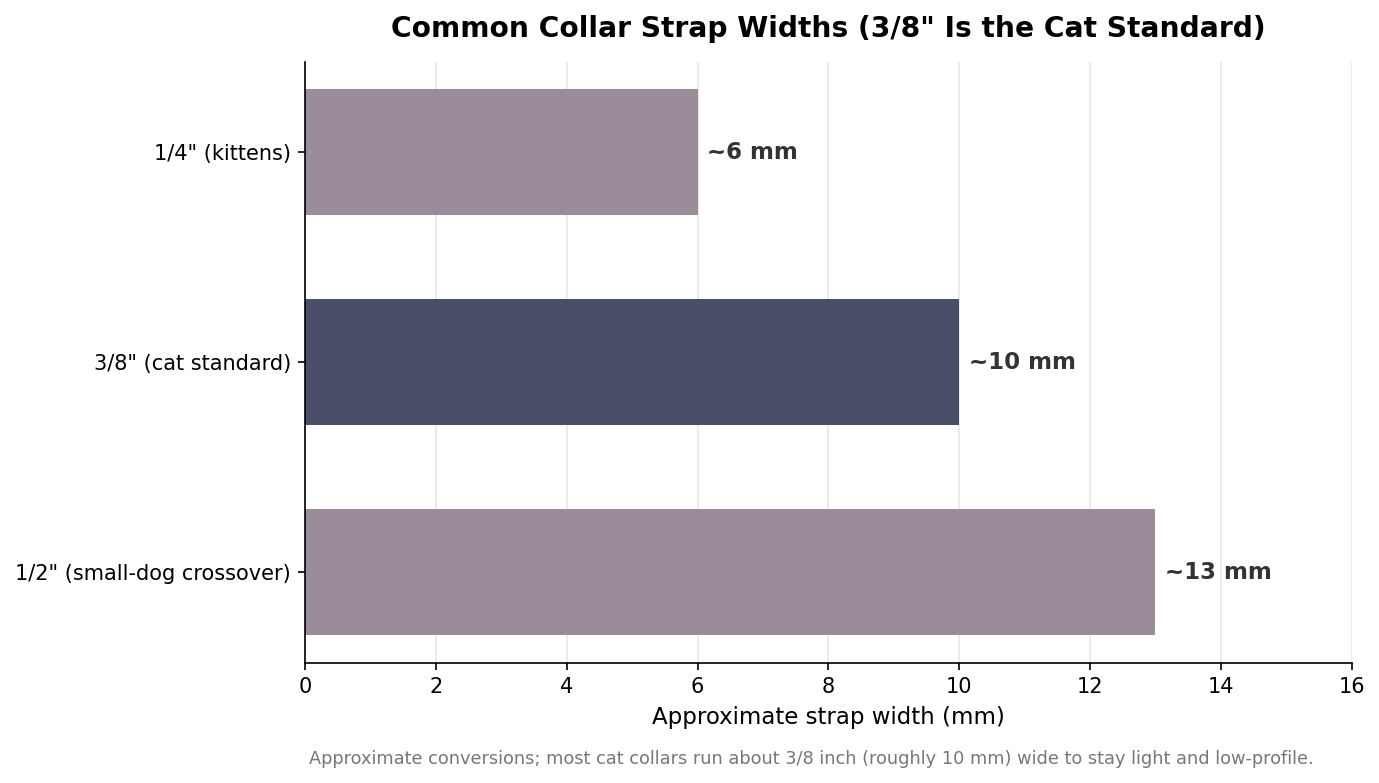
Width is where cat collars diverge sharply from dog collars. The standard cat collar strap is about 3/8 inch wide, roughly 10 millimeters, which keeps the collar light and low-profile on a small neck. Narrower quarter-inch straps show up on some kitten collars, while half-inch straps really belong to small dogs and tend to feel bulky on a cat. Staying near that 3/8-inch standard keeps weight down, and weight is worth minding once you add a bell or an ID tag, since a heavy charm on a light collar can bother a small animal all day.
The breakaway buckle is the piece that turns a well-fitted collar into a safe one. Unlike a dog’s fixed side-release buckle, a breakaway is designed to pop open under sustained pressure so that a snagged cat can pull free instead of being trapped or choked. This is precisely why the two-finger fit matters so much: too loose and the collar catches on things in the first place, while too tight can prevent the buckle from loading and releasing the way it should. A correctly snug breakaway collar is a system, and the fit is half of it. Reflective stitching and a quiet, lightweight bell are useful add-ons, but they do not substitute for the buckle or the fit.
Kittens, multi-cat homes, and rechecking the fit
Kittens grow fast, so a collar that fit last month can be tight this month. Check a growing kitten’s fit about once a week, running the two-finger test each time and letting the collar out as needed until the cat reaches full size. In a multi-cat household, resist the urge to buy one size for everyone; measure each cat, since even littermates can differ by an inch or more, and mismatched collars are a common reason one cat’s collar ends up doing nothing useful.
None of this changes much once a cat is grown, but it is worth a periodic glance. Coats thicken in winter and thin in summer, cats gain and lose a little weight, and hardware loosens over months of wear. A quick two-finger check every so often, plus a look at the buckle and stitching, keeps the collar doing what it is meant to do. Measure carefully, buy to a range that leaves adjustment room, keep the strap near the 3/8-inch cat standard, and insist on a breakaway, and the collar will sit comfortably and come away cleanly if it ever needs to.
Win Free Stuff
Enter below for a chance to win plus receive 10% off your first order.
🎉 You are in!
Check your email for your 10% off code. Good luck!