A bell and a bright collar cover are the two cheapest things you can add to an outdoor cat’s collar to cut how much wildlife it kills, and unlike most of the claims on pet-store packaging, both have been tested in real field studies. The results are more interesting than a simple yes or no: how well each works depends heavily on whether your cat mostly hunts birds or mostly hunts mice. Here is what the research actually found and how to choose based on what your cat brings home.
What a bell does, and where it stops working
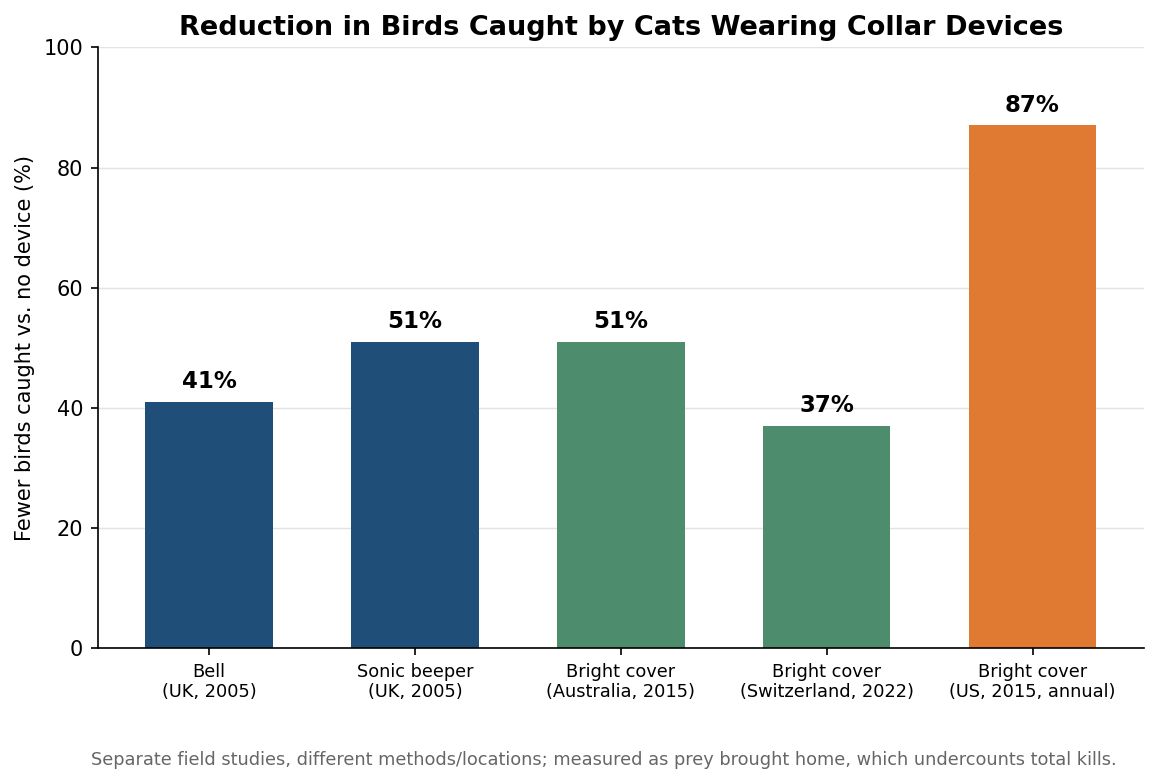
The idea behind a bell is simple — it gives prey a split-second warning during the final pounce. A UK field study published in 2005 tested this directly and found that cats wearing a bell caught about 41% fewer birds than cats with a plain collar, while a small electronic sonic device did a little better at roughly 51% fewer. That is a real effect, not a marketing figure, and it is enough to matter across a hunting season. The limits are just as real. Some cats learn to move more carefully to keep the bell quiet, and a bell does far less for prey that cannot easily flee, such as fledglings or a nest a cat has already located. A single bell can also lose its edge over time, which is why some owners rotate in a second bell or a louder one. Owners sometimes worry the constant jingle stresses the cat or harms its hearing, but there is little evidence of that in normal use, and most cats stop reacting to the sound within a day or two.
What a bright collar cover does
Collar covers take a completely different approach. Instead of making noise, they wrap the collar in a wide band of bright, high-contrast color. Birds have excellent color vision and tend to spot the vivid collar and take flight before the cat is in range, so these covers are aimed squarely at protecting birds. The numbers from independent studies are striking. A US study run near Canton, New York found cats wearing a cover caught 87% fewer birds across a full year — an average of 0.72 birds per cat per year with the cover versus 5.56 without — and the effect was strongest in spring, at roughly a 95% reduction, versus about 70% in fall. A separate study in Western Australia measured about a 51% reduction in birds, and a Swiss study found around 37%. The spread reflects different climates, cat populations, and how the studies counted prey, but every one of them found a meaningful drop.
Match the device to the prey your cat actually hunts
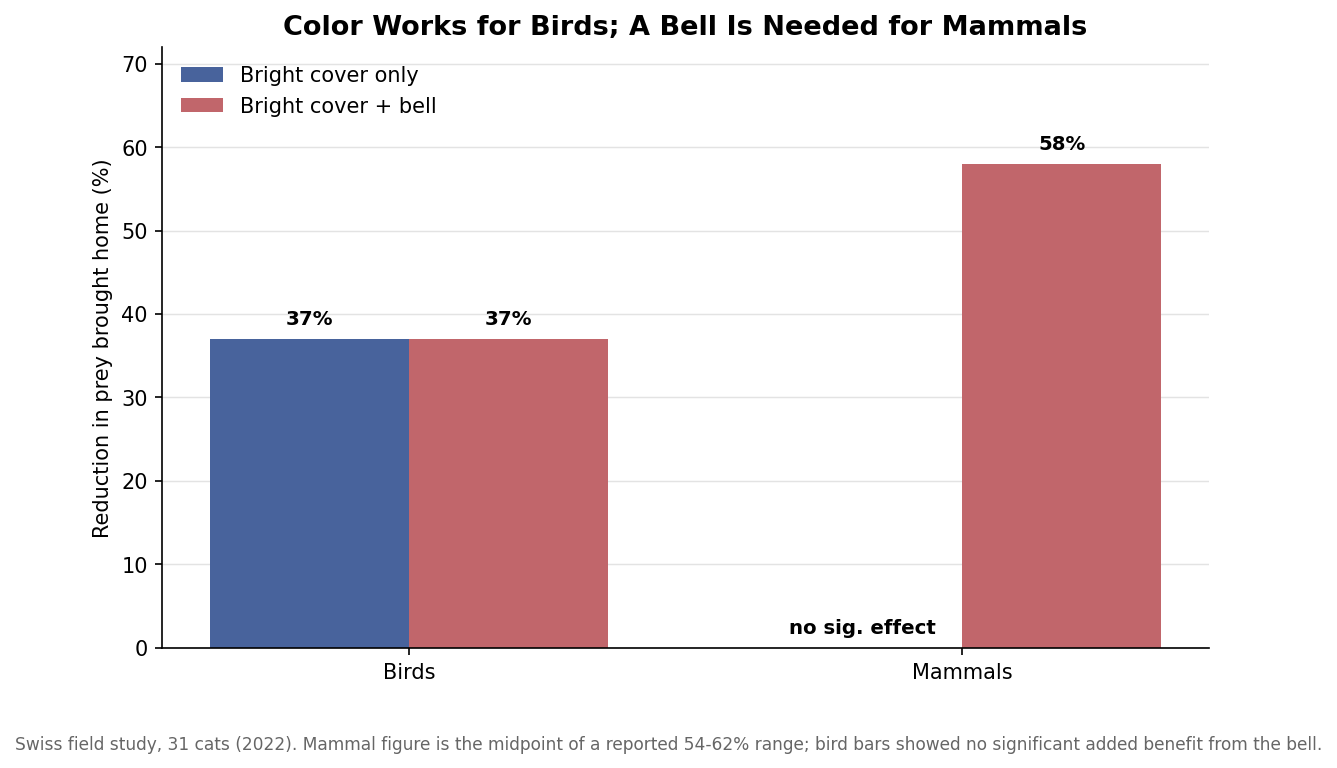
This is where the choice gets practical. That Swiss study, which ran with 31 cats in 2020, tested the cover alone against the cover paired with a bell, and split the results by prey type. The bright cover on its own cut birds by about 37% but had no significant effect on mammals — voles, mice, and shrews do not respond to a bright collar the way birds do. Adding a bell changed the mammal picture entirely, cutting mammals brought home by somewhere between 54% and 62%, while adding little extra protection for birds beyond what the cover already provided. The takeaway is clean: if your cat is a bird hunter, the bright cover does most of the work; if it comes home with mice and voles, you need the bell; and if it hunts both, you want both on the collar at once.
Getting your cat to accept the device
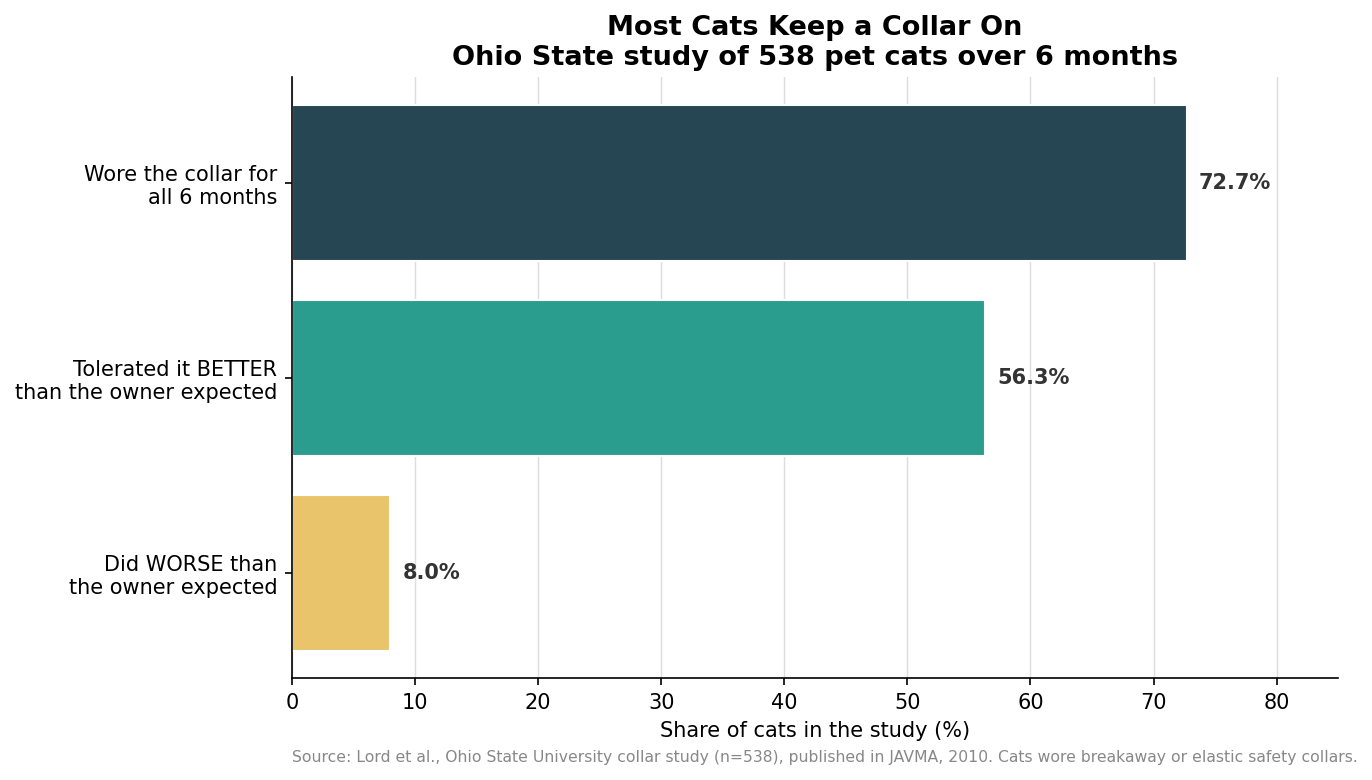
Both add-ons only help if the cat keeps them on, and acceptance is usually better than owners expect. In the Swiss study, about 70% of cats had gotten used to the collar cover within a single day, and roughly 72% of the owners chose to keep using it after the trial ended. A minority of cats fuss at first, and the covers can look conspicuous enough that about a third of owners reported other people reacting to the appearance, but the animals themselves adjust quickly. Introduce the collar indoors for short stretches before letting the cat out in it, recheck the fit after the first few wears since cats can lose a little coat under a new collar, and give a nervous cat a few days to settle rather than pulling the device off at the first shake of the head.
Fit, safety, and the honest caveats
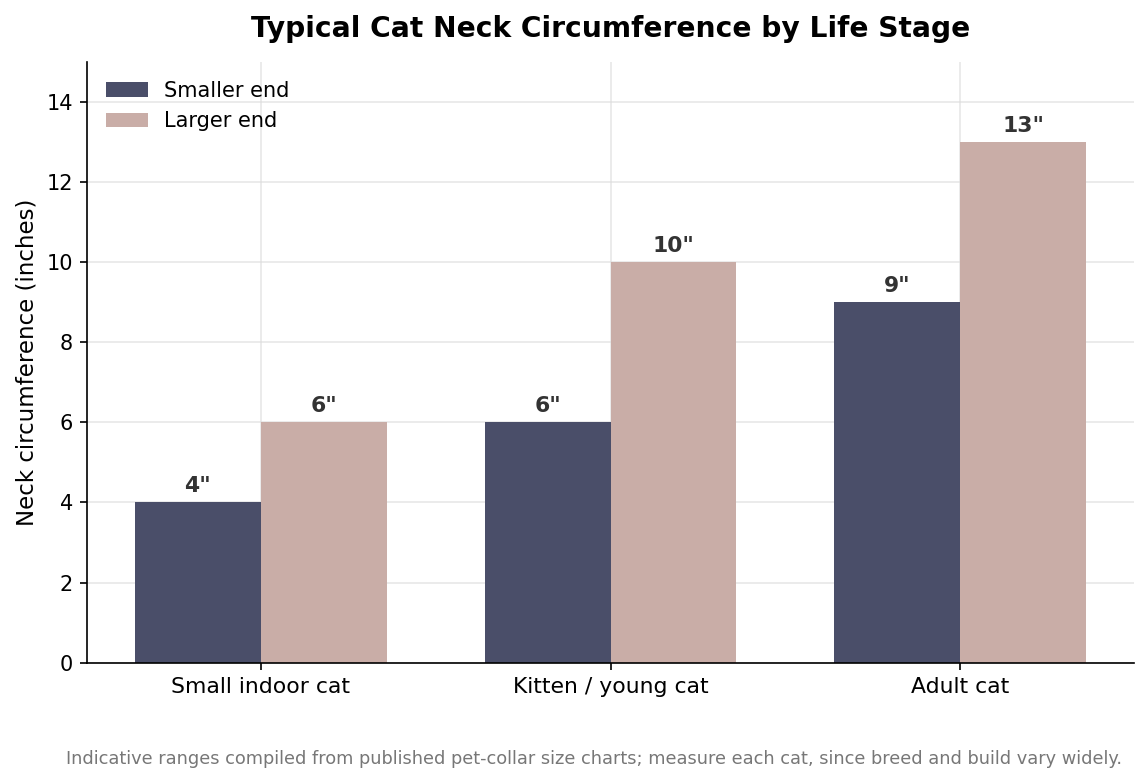
Two things matter before any of this helps. First, the device has to ride on a properly fitted breakaway collar — an outdoor cat’s collar should release under load so it cannot snag and trap the animal, and a bell or cover changes none of that requirement. Second, no device is a wildlife force field. These studies measure prey brought home, which is known to undercount total kills because cats eat or abandon much of what they catch, so the real reduction in animals killed is only part of what the percentages suggest. Devices also do nothing to protect the cat itself from cars, disease, or other outdoor hazards. The single most effective step remains limiting outdoor time at dawn and dusk, when hunting peaks, and keeping the cat in overnight; a bell and a bright cover are the low-effort additions that stack on top of that, not a replacement for it.
If you want the most protection for the least money and fuss, the evidence points to one combination: a bright collar cover to handle birds and a bell to handle mammals, both riding on a well-fitted breakaway collar. It will not stop every hunt, but across a season it measurably lowers what a free-roaming cat kills, and it does so with two add-ons that cost very little and take seconds to fit.